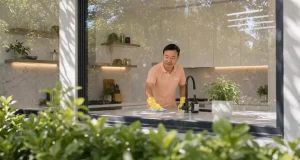
Skipping a clean doesn't just leave mess behind. Some of what builds up while you're putting it off doesn't wash away. It gets ground in, etched in, or stained in, permanently. In Brisbane's climate, Regular house cleaning works like compound interest. Small, consistent effort protects value over time. Neglect compounds the other way.
Most people think about house cleaning the way they think about washing dishes. Skip it for a week and you've got a bigger pile to deal with later. Fix it once, and you're back to square one.
That's a comfortable way to think about it. It's also mostly wrong.
A house doesn't reset to zero when you finally get around to cleaning it. Some of what builds up doesn't wash away when you do. It gets ground in, etched in, or stained in. Cleaning is closer to how money grows or shrinks over time: small, regular amounts compound into something much bigger than they look on any single day.
Here's what nobody tells you: some of that damage cannot be undone by cleaning harder later. It can only be prevented by cleaning sooner.
The Carpet That Uglied Out Early
Carpet wear doesn't usually come from the carpet being old. It comes from what's sitting at the base of the fibres.
The Carpet and Rug Institute, the industry body that certifies vacuums and carpet maintenance standards, has documented a phenomenon they call "uglying out." It happens when carpet shows visible graying and flattening in high traffic areas long before its actual design life is up, sometimes after as little as a third of the carpet's expected lifespan. The cause isn't foot traffic itself. It's the dirt, grit and fine particles that get walked in and never properly vacuumed out.
That grit behaves like sandpaper. Every footstep grinds it deeper into the base of the fibres, and over time it physically cuts and abrades the carpet from the inside. Vacuuming regularly removes that grit before it has a chance to settle in. The Carpet and Rug Institute's own guidance recommends vacuuming high traffic areas daily, medium traffic areas a couple of times a week, and lighter traffic areas weekly, specifically because the soil starts doing damage long before it's visible to the eye.
By the time matted, grey, worn-looking carpet is obvious, the damage has usually already happened. No amount of cleaning after that point brings the fibres back. The carpet has to be replaced years earlier than it should have needed to be, all because the grit was allowed to sit instead of being lifted out regularly.
You can also read about professional carpet cleaning and how it works alongside regular maintenance to protect your floors.
Your Windows Are Quietly Turning to Stone
Glass feels like the most wipeable surface in a house. Most of the time it is. But hard water, the kind with dissolved calcium and magnesium, behaves differently on glass than ordinary dust does.
When hard water dries on a window, shower screen or glass door, it doesn't just sit on top waiting to be wiped off. Over time those minerals bond with the surface of the glass itself. Industry sources in glass restoration describe this process as etching, and once it's set in, it's permanent. Some glass restoration specialists report this kind of etching can begin within as little as 12 to 18 months of regular hard water exposure without proper cleaning, particularly around shower screens, sprinkler overspray on outdoor glass, or runoff from concrete and brick surfaces.
There's a simple way to tell the difference between a stain that's still removable and one that isn't. If a cloudy mark on glass disappears or fades after cleaning, it's sitting on the surface and can be lifted off. If it stays exactly the same, wet or dry, scrubbed or not, the minerals have already bonded with the glass. At that point you're looking at professional glass restoration, which costs far more than the cleaning that would have prevented it.
By the time etching on glass is obvious enough to notice, ordinary cleaning won't reverse it. The only fix that works is the one that happens before the damage is done.
Grout Doesn't Forgive Either
Grout looks like a small detail, but it behaves completely differently to the tile around it. Tile is sealed and non-porous. Grout, unless it's been specifically sealed, is porous, which means it absorbs liquid rather than letting it sit on top.
That's exactly why grout stains in a way tile never does. Spilled coffee, soap scum, shower water: all of it can soak into unsealed grout rather than wiping off the surface. Tile and grout cleaning professionals describe a frustrating pattern where grout that isn't sealed and cleaned regularly gets worse the more you try to scrub it, because dirty water gets pushed deeper into the porous surface instead of being lifted out. Left long enough, the staining becomes permanent. The only real fix left is replacing the grout entirely.
Regular cleaning, before that staining sets in, is the only point at which it's still genuinely reversible.
Protect your surfaces before the damage is done. Get a free quote for regular house cleaning in Brisbane and keep grit, minerals and staining from compounding quietly against you.
Get a Free QuoteThe Real Cost of "I'll Get to It Eventually"
Put these three together and a pattern shows up. Carpet that wears out a third of its expected lifespan early. Glass that needs professional restoration instead of a wipe-down. Grout that needs ripping out and replacing instead of a scrub. None of these are dramatic, sudden problems. They're all slow, quiet, compounding ones, and by the time they're visible enough to worry about, the cheap fix is already off the table.
This is the real argument for regular cleaning, and it has very little to do with how the house looks on a Tuesday afternoon. It's about which version of your home's future you're paying for: the one where small, regular maintenance keeps surfaces protected, or the one where neglect compounds quietly until the only options left are expensive ones.
You can also read: How Often Should You Get Your House Cleaned in Brisbane?
What This Means for Your Home
Compound interest works because small, consistent contributions add up to something much bigger than they look on any single day. Neglect works exactly the same way, just in reverse.
The good news is that the moment you interrupt it with regular house cleaning, the compounding stops working against you. Brisbane House Cleaners offers weekly, fortnightly and monthly house cleaning services built around what your home actually needs, not just what looks obvious on the day.
Frequently Asked Questions
How often does my house need to be cleaned to prevent long-term damage?
It depends on the surface and how much traffic it gets. The Carpet and Rug Institute recommends vacuuming high traffic areas daily and lighter traffic areas weekly, which is far more often than most households manage on their own. A professional regular clean, whether weekly, fortnightly or monthly, keeps pace with that buildup before it has time to set into fibres, glass or grout.
Can a regular house cleaner stop carpet wear, or do I need a separate carpet clean as well?
Regular vacuuming and floor care during a standard clean removes the everyday grit before it gets ground deep into the carpet pile, which is the main driver of premature wear. A periodic carpet steam clean complements that by lifting out anything that's settled further down. The two work best together rather than replacing each other.
Is it too late if my grout or windows are already stained?
Not necessarily, but it depends how long the staining has been there. Hard water deposits and fresh grout staining that's still sitting on the surface can often be lifted with the right cleaning approach. Once minerals have etched into glass or staining has soaked deep into porous, unsealed grout, ordinary cleaning won't reverse it, and you're looking at professional restoration or replacement instead.
Does regular cleaning actually save money long term, or is that just a sales pitch?
The maths genuinely supports it. Replacing carpet years earlier than necessary, having glass professionally restored, or re-grouting a bathroom all cost significantly more than consistent maintenance cleaning over the same period. The savings aren't dramatic in any single week, which is exactly why they're easy to underestimate until the bigger bill arrives.
What's the difference between regular cleaning and spring cleaning when it comes to protecting my home?
Regular cleaning is the ongoing maintenance that stops everyday grit, soap scum and dust from accumulating in the first place. Spring cleaning is a deeper periodic reset that catches anything that's built up in less accessible spots over a longer stretch of time. Used together, regular cleaning prevents the damage and spring cleaning catches what slips through.
Brisbane House Cleaners helps households across Brisbane keep their surfaces protected, their floors lasting longer, and their homes easier to maintain week to week. Whether you're in Paddington, Ashgrove, New Farm, Indooroopilly, Chermside, Sunnybank, Carindale or Hendra, you can get a free house cleaning quote or contact our team to organise your next clean.